Terrestrial worlds beyond the Solar System

What Are Rocky Exo-Worlds Like?

Even within our own Solar System, Earth’s closest rocky siblings, Venus and Mars, remind us that similar size, age, and origin do not lead to similar worlds. Around other stars, rocky planets occupy an even broader range of stellar irradiation, orbital and rotational states, thermal regimes, and chemical inventories. Some may retain thick atmospheres, while others may be stripped nearly bare. Their climates and surfaces are shaped by processes including atmospheric escape, interior–surface–atmosphere exchange, circulation, collapse, and chemistry.

My research asks what these rocky exo-worlds are actually like. I use physical models, from coupled interior–atmosphere evolution models to three-dimensional general circulation models, to link planetary environments, atmospheric processes, and observable signatures.

Image credit: NASA/JPL-Caltech
Ultra-short-period planets

Ultra-Short-Period Rocky Planets: From Temperate Worlds to Lava Worlds

Ultra-short-period rocky planets, with orbital periods of hours to days, are among the most favorable small planets for atmospheric characterization. They can be habitable-zone planets around white dwarfs, warm terrestrial planets around M stars such as TRAPPIST-1 b, or lava worlds around K or G stars such as 55 Cancri e and TOI-561 b.

Many ultra-short-period rocky planets orbit so close to their host stars that they are likely tidally locked, with permanent daysides and nightsides. At the same time, their short orbital periods correspond to rapid synchronous rotation. Much of my PhD work focuses on modeling the atmospheres of these close-in, tidally locked rocky worlds. Read the blocks below for more information.

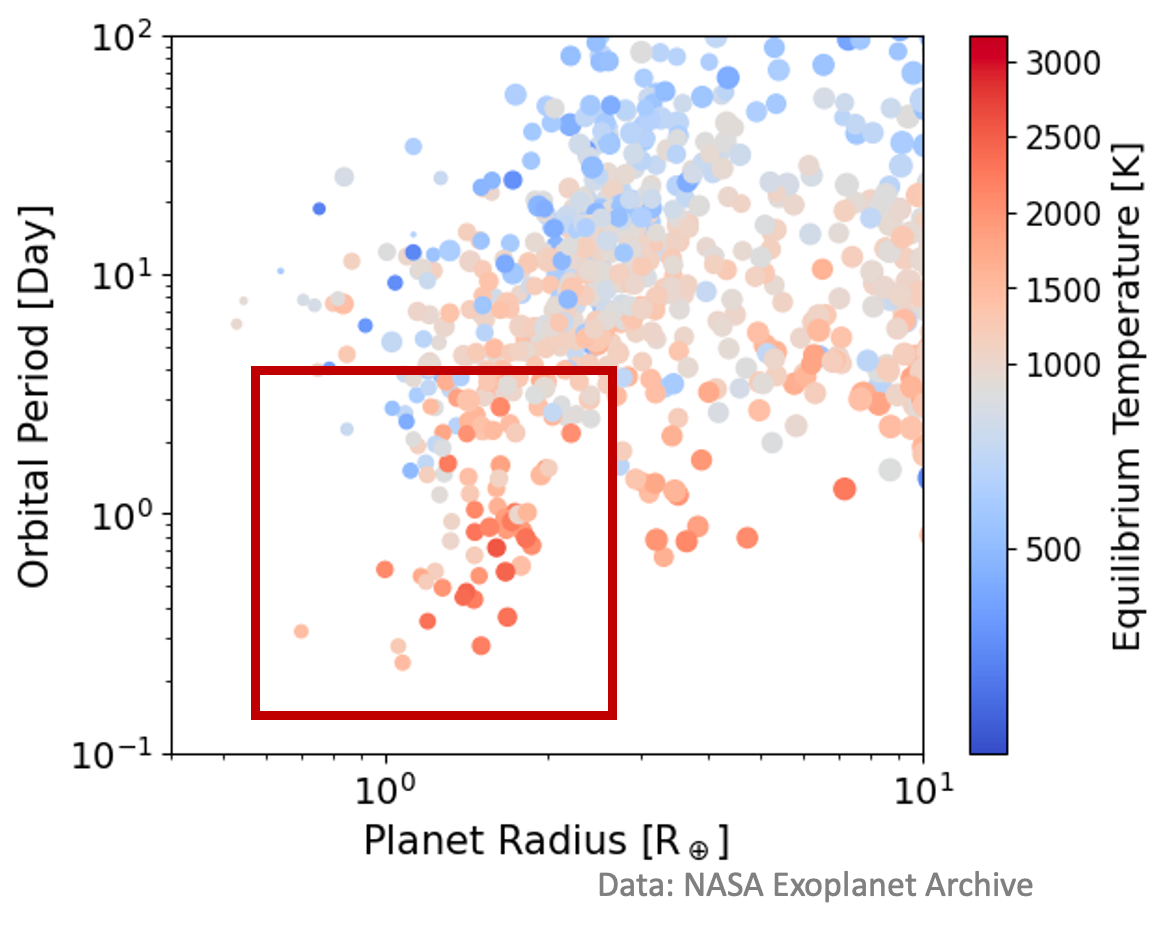
Orbital period, planet radius, and equilibrium temperature of confirmed exoplanets
Orbital period, planet radius, and equilibrium temperature of confirmed exoplanets.
Featured image for the white dwarf habitable-zone study
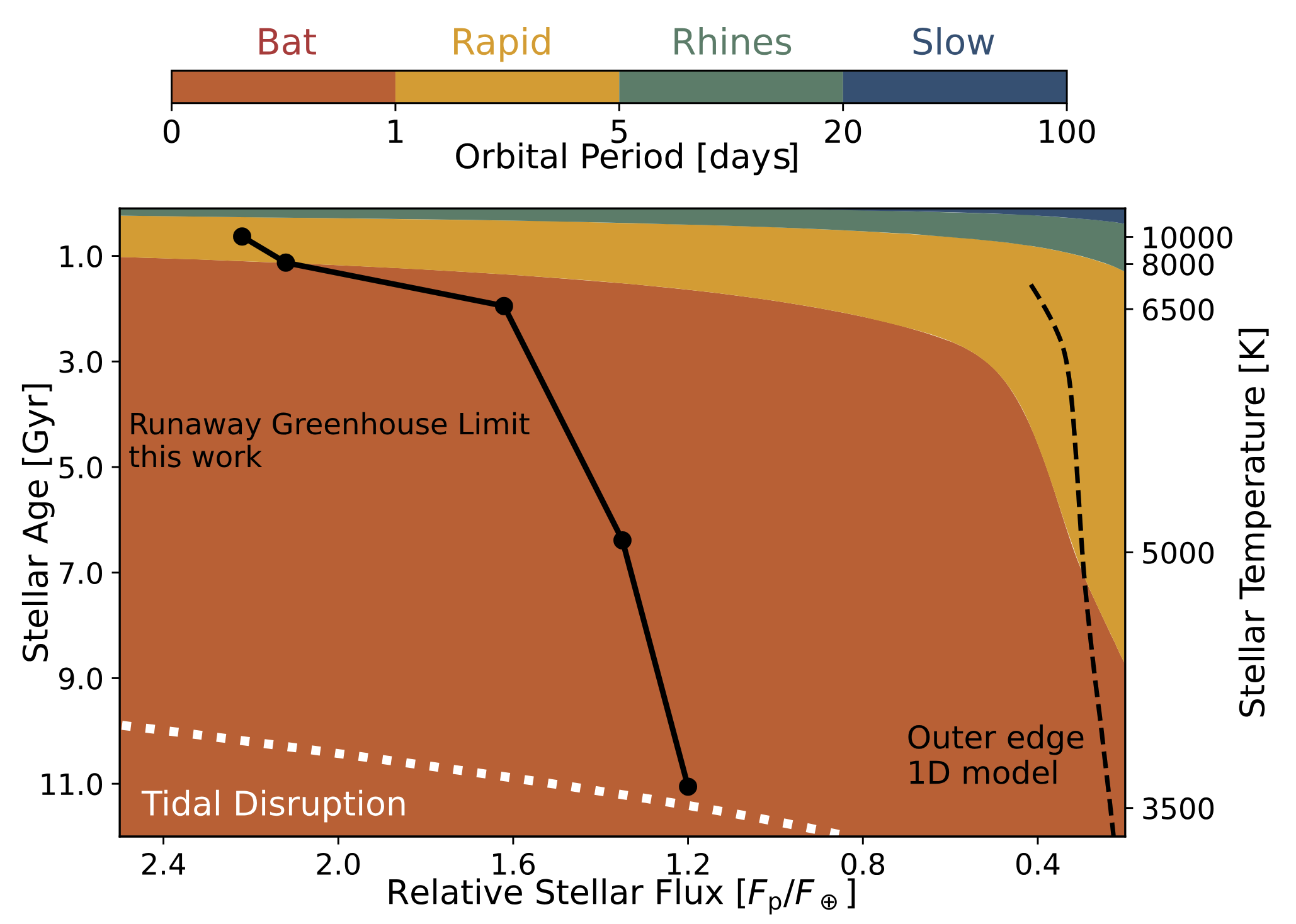
White dwarf habitable zones

Habitable zones around "dead stars"?

White dwarfs offer a unique opportunity to search nearby stellar systems for signs of life. The orbital periods of potential habitable planets around white dwarfs range from hours to days. Our GCM simulations show that most white dwarf planets enter a new atmospheric dynamical regime, bat-rotation regime. This dynamical regime reshapes the inner edge of the habitable zone and their thermal phase-curve signatures.

Read more
Next step

To be continued.

Atmospheric stability, heat redistribution,... and implications for observations.